
Heat and power generation
About 60% of industrial processes heat is lost as waste heat.
Alternatively additional renewable heat sources as biomass, solar thermal and geothermal are susceptible for being used.
All this heat can be used by our technologies, generating electricity and useful heat at lower temperature through our Organic Rankine Cycles (ORC) or upgrading thermal power and temperature through our High Temperature Heat Pumps (HTHP)

System operation
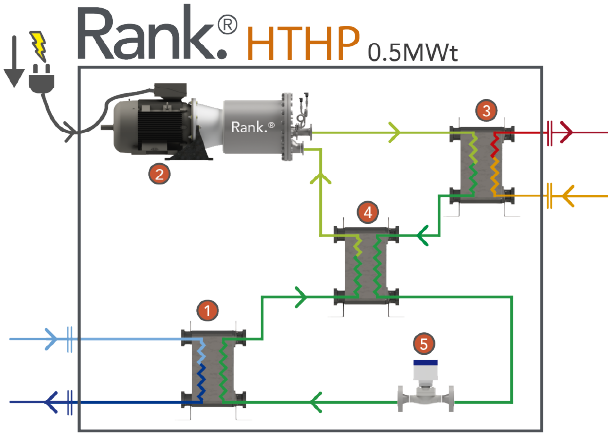
1. EVAPORATOR: The evaporator takes the low temperature heat from the source.
2. COMPRESSOR: The working fluid circulates through the system thanks to the compressor.
3. CONDENSER: The condensation of the working fluid releases heat at high temperature (useful heat).
4. REGENERATOR: To increase the efficiency of the system, a regenerator is used.
5. EXPANSION VALVE: The expansion valve regulates the pressure levels on the system.
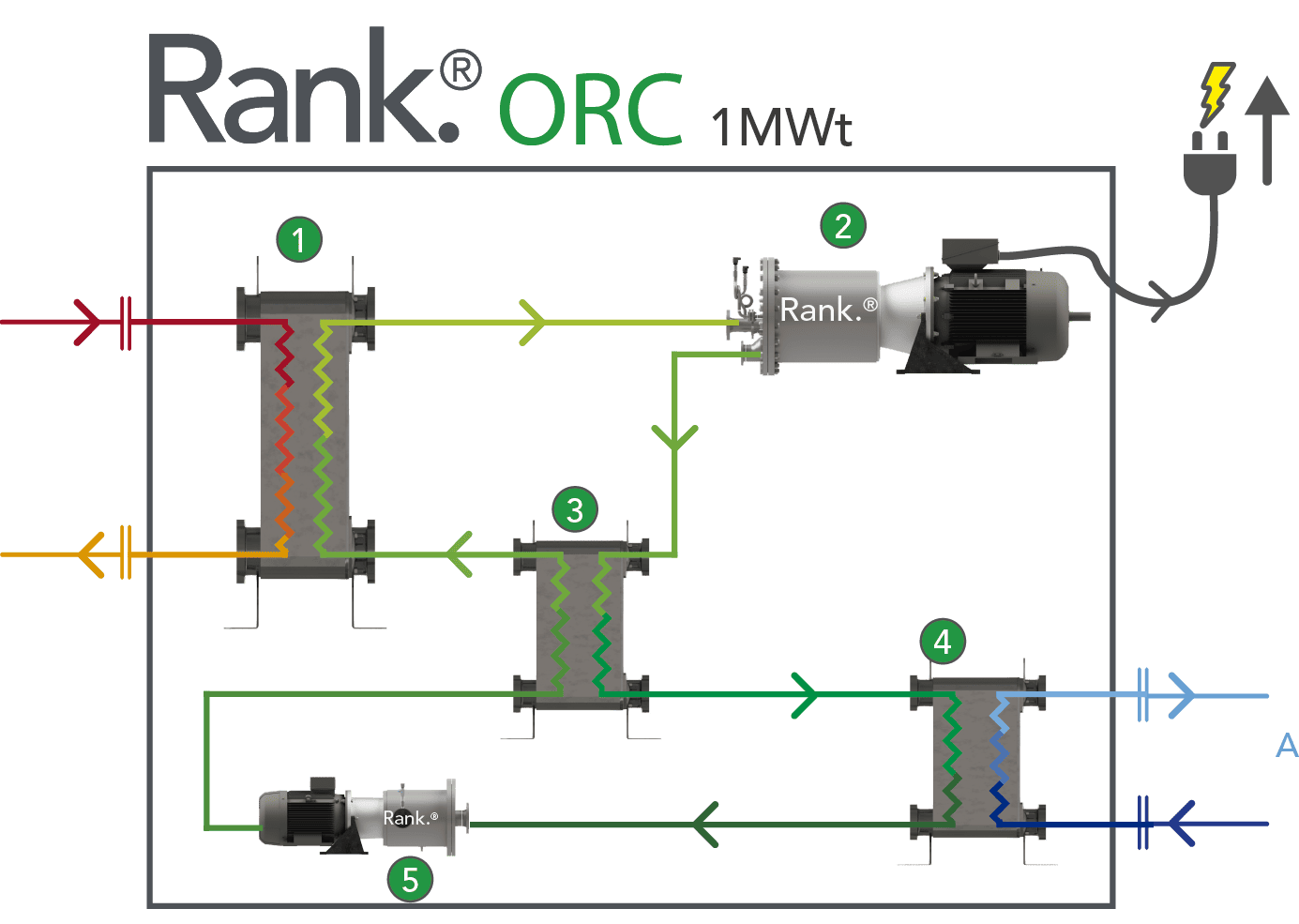
1. EVAPORATOR: A heat exchanger that provides heat to the high-pressure working fluid and passes from subcooled liquid to superheated vapor (in the form of water or thermal oil).
2. TURBINE: The expansion of the superheated vapor is used to generate clean electricity.
3. REGENERATOR: To increase the efficiency of the system, the expanded working fluid is used to preheat the high-pressure liquid at the inlet of the evaporator.
4. CONDENSER: It produces useful heat (in the form of water) from the condensation of the working fluid at low pressure.
5. PUMP: The pressure of the working fluid is increased, and the ORC cycle is completed.

